
The Instinct to Wire Systems Together Directly
When two systems need to talk, the instinct is often to wire them together directly. One system reaches into the other's database. They share credentials. They share logic. It works on day one. Then it becomes the thing everyone is afraid to touch.
There is a calmer way to build the connection. Keep the two systems independent. Let them share nothing except a queue of jobs.
How a Queue-Based Connection Works
The idea is simple. The external system does not log into Odoo and start changing records. Instead, it inserts a job into a queue. The job says what needs to happen. Odoo picks the job up on its own terms and does the work. Traffic in the other direction works the same way.
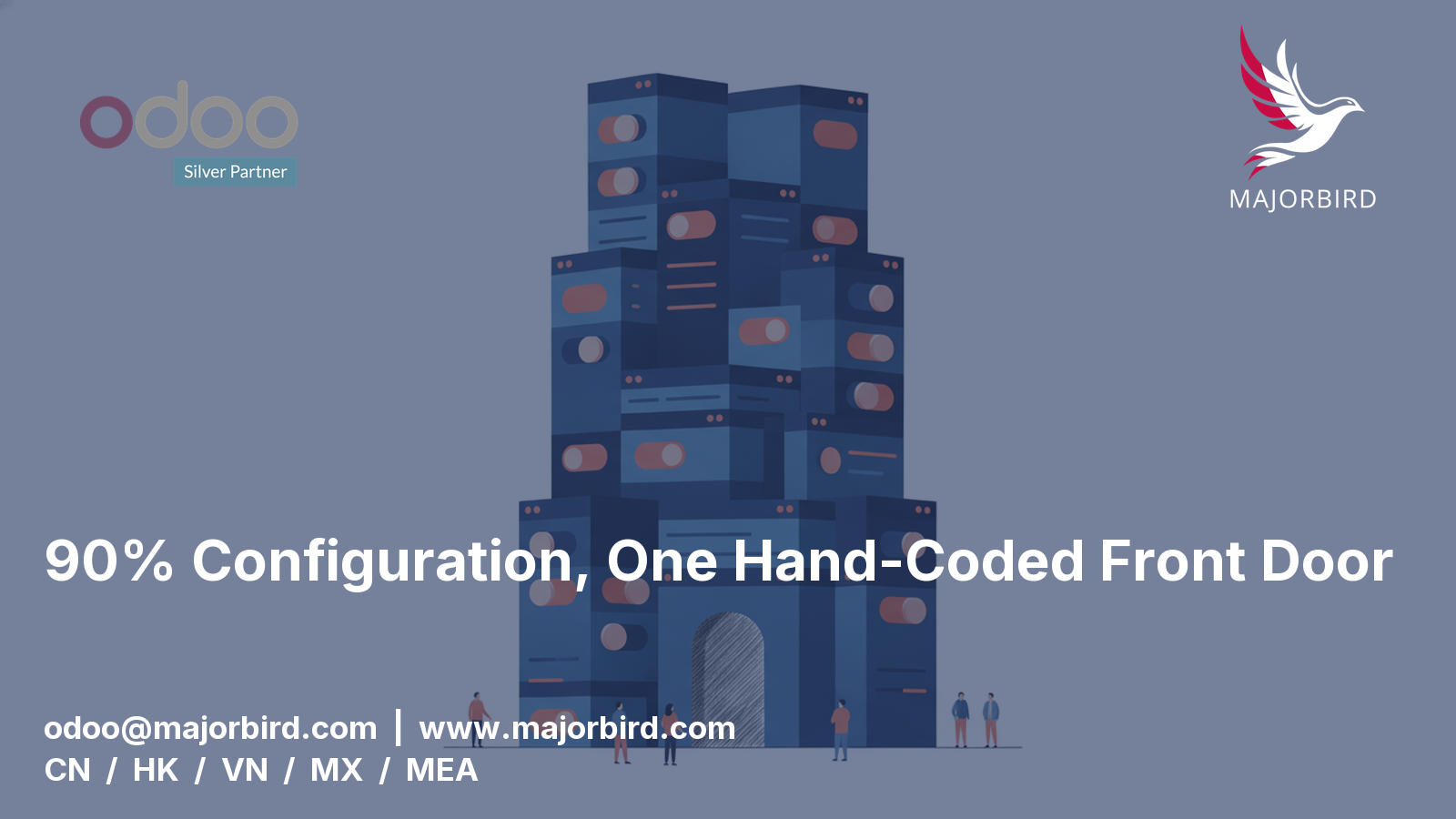
This keeps the surface between the systems very small. There is one place where jobs arrive. That is the only door. The remote system never needs Odoo's internal credentials. It never needs to know how Odoo stores anything. Odoo never needs to know how the remote system works inside. Each side can change, upgrade, or move without breaking the other, as long as the shape of the job stays the same.
We used exactly this pattern on a manufacturing deployment with a two-way link to an external planning system, Skyplanner. The connection runs through one authenticated gateway. Outside systems push and pull through that single governed door. Behind it, jobs queue up and get processed in order.
Why This Scales and Stays Cheap to Maintain
A shared-everything integration grows more fragile as both systems evolve. A queue-based one does not. The maintenance surface stays tiny, because there is only one contract to protect. When load rises, a queue absorbs the spikes instead of hammering the database in real time.
Most of that same deployment was built in Odoo's own Studio tooling, with only a few hand-coded modules for the jobs Studio cannot cover. The gateway is one of them, and it earns its place. Default to configuration, reserve code for the few things that truly need it, and keep the systems decoupled. Majorbird builds integrations this way on purpose. If you are connecting Odoo to another system and want it to last, let's talk.